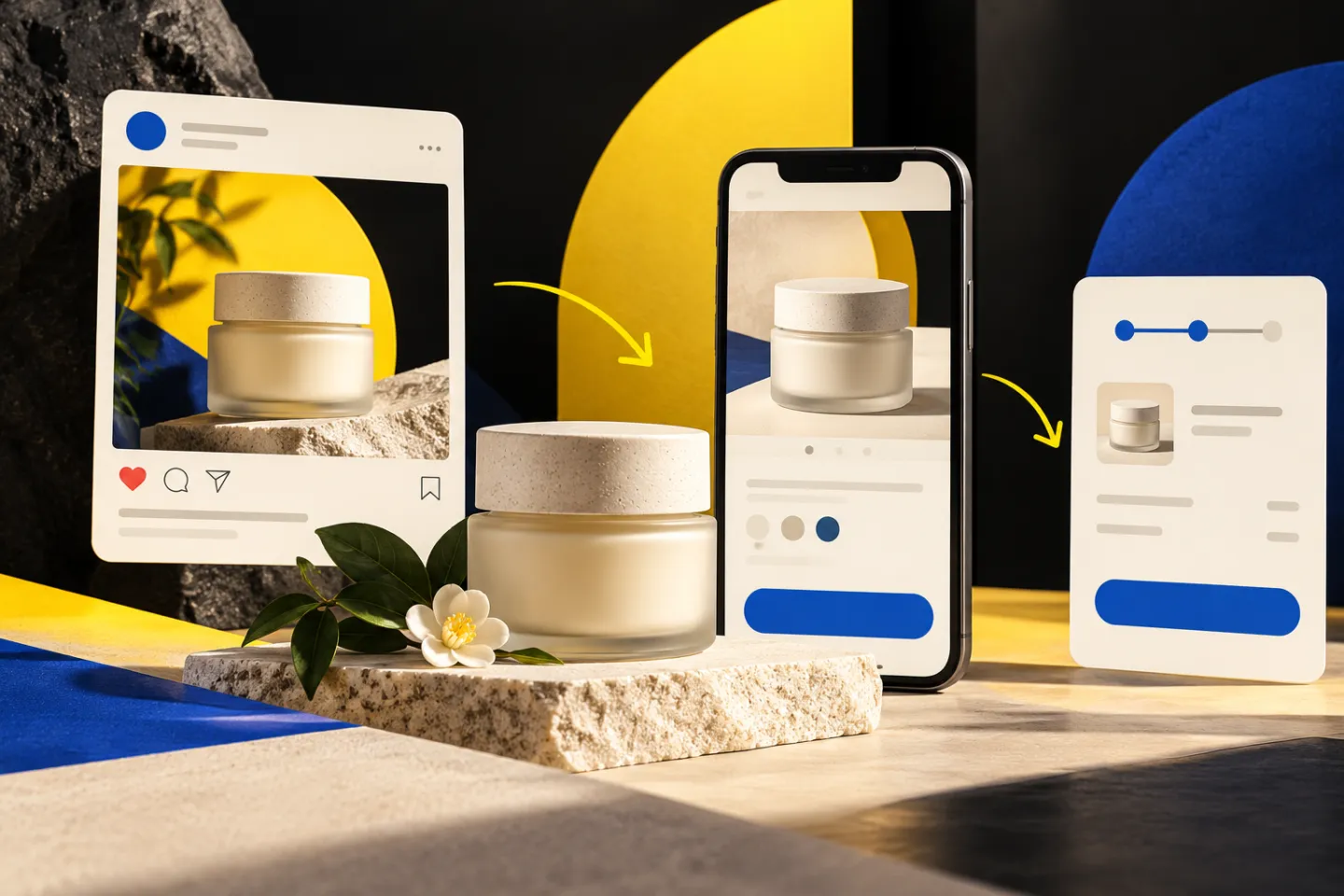
Facebook ads can help ecommerce brands introduce products, demonstrate their value and bring interested shoppers to a store. They are most useful when the offer, creative, product page, checkout and measurement work together. Advertising cannot establish product demand or profitability by itself, and a campaign reporting sales may still lose money after fulfilment and returns. Start with a product people can understand, a page that answers their buying questions and a tested purchase event. This guide explains how to plan Facebook ads for ecommerce, from selecting a product and creative angle to evaluating orders, retargeting and the practical limits of scaling.
Choose an offer you can explain and fulfil
Start with a product whose price, benefit, availability and delivery conditions are clear. If the item needs demonstration, identify what a short video or image sequence can show convincingly. Avoid selecting a product solely because its margin looks good on a spreadsheet.
A hypothetical haircare brand might lead with a simple demonstration of product texture and application, while a fashion store might show fit and movement. Both need accurate claims and realistic availability. Our fashion and ecommerce marketing page describes the broader acquisition context; the campaign should still reflect the actual product and customer.
Build creative concepts that test different reasons to buy
A demonstration, customer question, comparison or use scenario can represent a distinct hypothesis. Five nearly identical images with different colours usually teach less about the audience. Write down the question behind each concept and the product-page section that supports it.
Keep the promise consistent from ad to landing page. If the creative focuses on a specific collection, send visitors to that collection or a relevant product rather than an unrelated homepage. Do not manufacture testimonials or customer results. Product demonstrations and clear explanations are useful evidence without pretending to be a client case study.
Make the mobile product page earn the purchase
Show clear product images, variants, price, delivery information and genuine return terms. Make sure the page remains usable on slower connections and small screens. Hidden shipping costs, unclear sizing and unavailable variants create problems advertising cannot solve.
Walk through the purchase on a real phone. Check address entry, payment failure and order confirmation. The ecommerce conversion guide provides a structured diagnosis, while ecommerce SEO checks cover the page structure that also helps organic discovery. One well-built destination can support several acquisition channels.
Measure the purchase and the business outcome
Validate the order event, value and currency before relying on campaign reporting. If browser and server events describe the same order, implement the integration consistently so duplicate records do not distort the picture. The Conversions API article explains that measurement task.
Use retargeting to resolve a real question rather than repeat an endless discount; see the retargeting guide. Compare acquired customers, fulfilled orders, returns and contribution alongside attributed ROAS. A campaign deserves more budget when its economics and fulfilment capacity support it, not simply because the dashboard is colourful. Our Meta Ads service connects these responsibilities.
A practical comparison
| Stage | Customer needs | What to verify |
|---|---|---|
| Discovery | A clear reason to care | Creative matches product truth |
| Product page | Evidence and buying details | Price, variant and delivery clarity |
| Checkout | Confidence and low friction | Working payment and error paths |
| After purchase | Fulfilment and support | Orders, returns and contribution |
Common mistakes and your next steps
Avoid these mistakes
- Optimising only for cheap clicks or easy-to-trigger events.
- Sending every creative to the same generic homepage.
- Increasing spend while returns, stock or checkout errors remain unresolved.
Your action checklist
- Select a product and an honest message.
- Create distinct concepts with written hypotheses.
- Test a mobile purchase and failure path.
- Verify event value, currency and duplication handling.
- Review fulfilled orders before scaling.
Frequently asked questions
Are Facebook ads useful for a new ecommerce store?
They can help test product discovery, but the store needs clear product information, reliable checkout and an affordable learning budget. Advertising is not proof of demand.
Should I use sales or traffic as the campaign goal?
Match the available objective and event setup to the business outcome. Cheap traffic alone does not establish a purchase campaign's effectiveness.
What ROAS should I target?
Calculate it from your own contribution, returns, repeat purchase evidence and cash-flow needs. A universal target can be misleading.
What to do next
Facebook ads work as part of an ecommerce system. Explain the product, remove buying uncertainty and measure fulfilled commercial outcomes before deciding how much more traffic the store should buy.
Have a project or a specific growth question? Talk it through with Outfox Social.
Build an ecommerce advertising plan