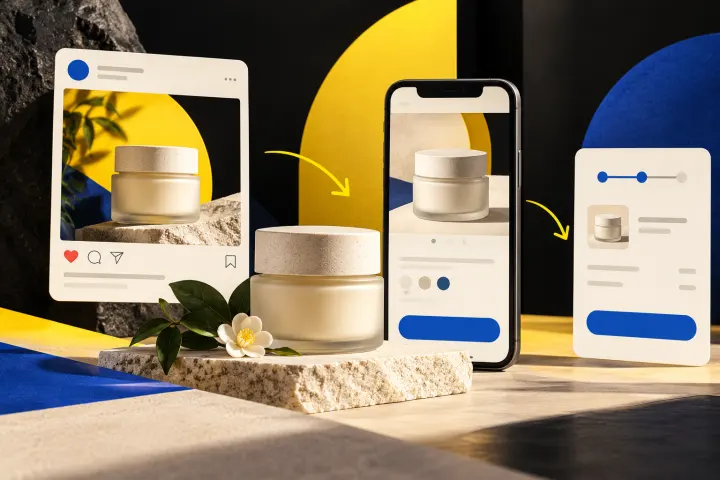
Start with Google Search ads when customers already express a relevant buying need in searches you can economically serve. Consider Facebook and Instagram advertising when visual discovery, product demonstration or audience interest can introduce your offer effectively. This is a decision framework, not a universal winner: Google Ads includes more than Search, and Meta campaigns can reach customers at several stages. Your first budget should test the clearest acquisition hypothesis while leaving enough money to learn. This guide compares Google Ads vs Facebook Ads through practical customer situations, creative requirements, measurement and business economics so you can choose a starting channel for the right reason.
Compare the creative and destination workload
Search advertising needs relevant query coverage, persuasive messages and a landing page that answers the intent. A local service may need clear coverage, availability, qualifications and a working call or enquiry path. Social advertising often needs more visual concepts and product demonstration to create interest.
A small team should include that production workload in the budget. Buying media without usable creative or a credible destination leaves the test incomplete. Our Google Ads service and Meta Ads service address different execution responsibilities, but both depend on a clear offer and a working journey.
Use a business scenario to choose the first test
Imagine a hypothetical physiotherapy clinic with defined service locations and capacity for new consultations. A focused search test might answer whether relevant local demand can produce qualified appointments at acceptable cost. That still requires accurate treatment information and responsible advertising.
Now imagine a fashion store with a visually distinctive collection but little existing brand search. A creative-led social test may reveal which product story attracts useful shoppers. Neither example proves the channel will work. Write the expected customer action and stop criteria first, then compare evidence over a suitable buying cycle rather than a few early clicks.
Avoid comparing dashboard numbers without context
Platforms can assign credit differently, and more than one can claim involvement in the same customer journey. Google's attribution report guidance explains how conversion credit is represented within its reporting.
Compare qualified enquiries, attended appointments or fulfilled orders in business records. Include management, creative and landing-page costs when judging acquisition efficiency. Read what performance marketing means for the economics foundation and the Facebook ecommerce guide when product discovery is the starting problem. Add a second channel when it answers a new question, not because every plan must contain both.
A practical comparison
| Question | Search-led test | Social-led test |
|---|---|---|
| Existing demand | Relevant queries are available | Audience may need product discovery |
| Message format | Intent-matched text and destination | Visual concepts and demonstrations |
| Critical dependency | Query relevance and landing clarity | Creative supply and offer clarity |
| Business evaluation | Qualified outcomes and economics | Qualified outcomes and economics |
Common mistakes and your next steps
Avoid these mistakes
- Selecting a platform only because a competitor uses it.
- Comparing cost per click without considering intent.
- Adding both platforms before either has a measurable hypothesis.
Your action checklist
- Describe how the customer becomes aware of the problem.
- Check whether relevant buying searches exist.
- Budget the required creative and landing work.
- Validate conversions and business records.
- Define what the first test must teach you.
Frequently asked questions
Which platform is cheaper?
It depends on the auction, audience, creative, offer and conversion journey. A cheaper click can still lead to a more expensive customer.
Should I split a small budget equally?
Not automatically. A focused test can produce clearer learning than two underfunded campaigns. Split only when both tests can answer a useful question.
Can both channels help the same business?
Yes. They can serve different parts of the journey. Coordinate messages and evaluate total business outcomes rather than adding their reported conversions blindly.
What to do next
Choose the first channel around a specific customer situation and an affordable test. Clear measurement and a useful landing experience will make the result more informative whichever platform you start with.
Have a project or a specific growth question? Talk it through with Outfox Social.
Choose your first acquisition test