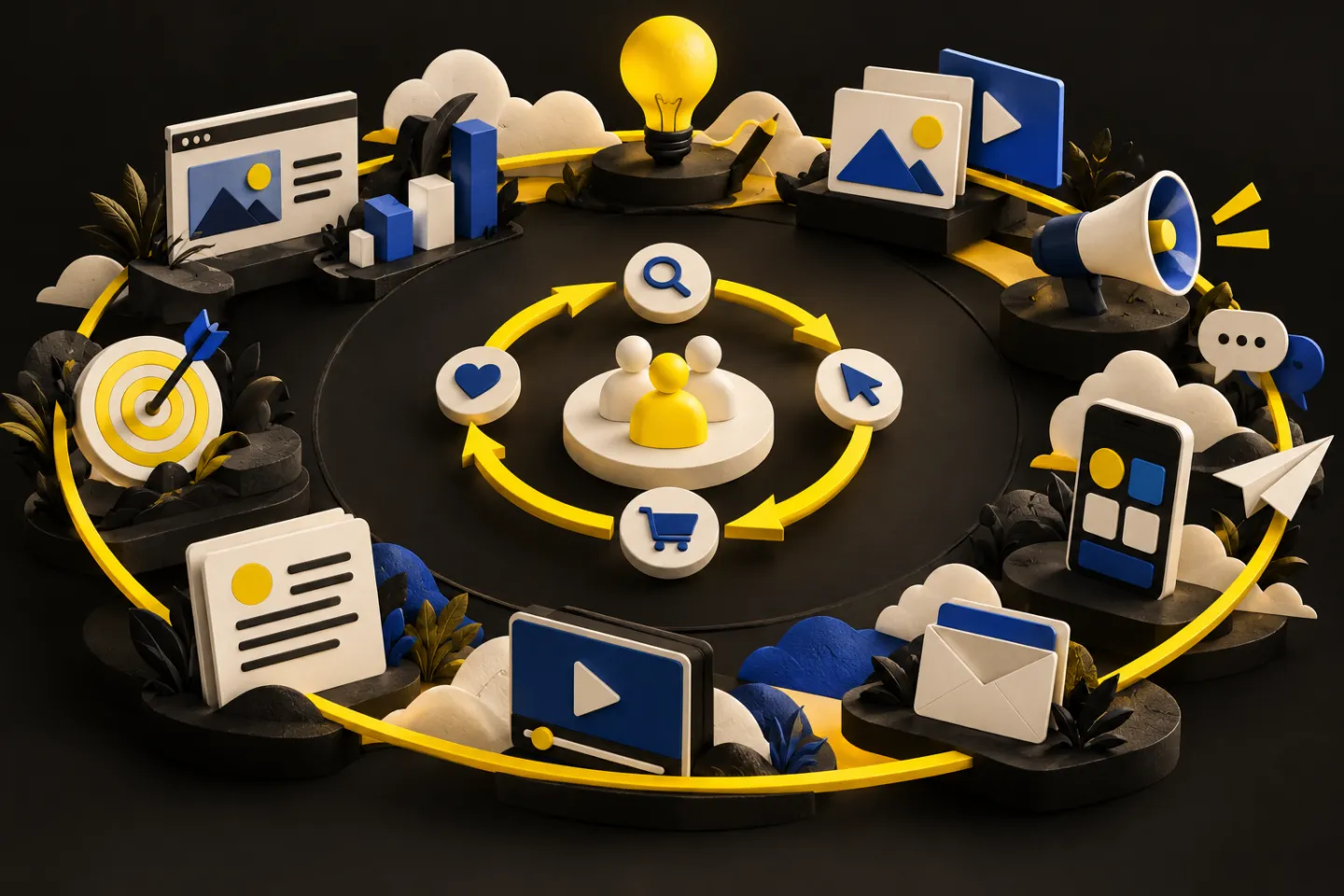
Digital marketing is the broader set of ways a business reaches and serves people through digital channels. Performance marketing is an outcome-focused approach within that broader activity, often associated with paid acquisition and measurable conversions. They overlap rather than compete. A business may need search-friendly content, a recognisable brand, useful email communication and effective paid campaigns at the same time. The right budget depends on current demand, the buying journey and the quality of the destination. This guide explains performance marketing vs digital marketing through practical responsibilities, measurement and planning examples, so you can decide what your business needs rather than choose a label.
Compare responsibilities before comparing agency packages
A digital marketing proposal might include social content, SEO, email, paid media and reporting. A performance marketing proposal might focus on ad accounts, creative testing, landing pages and conversion measurement. Neither phrase guarantees a specific deliverable.
Ask each supplier what they will actually do, what your team must provide and what is excluded. Who writes the landing page? Who prepares creative assets? Who fixes a broken purchase event? If these responsibilities fall between teams, the campaign can stall even when every agency delivers its own narrow report.
Some work captures demand and some helps create it
People searching for an urgent service may already know what they need. A new product category may need demonstration, education and repeated exposure before buyers search for it. Both situations can involve paid and organic channels.
Imagine a hypothetical haircare brand launching a refill format. Clear product education can make an advertisement easier to understand, while customer-service answers can remove purchase objections. A short-term campaign report might not assign every useful interaction credit. Read Google Ads vs Facebook Ads for a channel comparison, and what performance marketing means for the measurement foundation.
Measure at the level of the decision
For an acquisition test, cost per qualified enquiry or fulfilled order can guide practical changes. For content, useful discovery, engagement and assisted journeys may take longer to interpret. Do not force every activity into an immediate sales number or use long-term brand language to avoid accountability.
Google's attribution report documentation is helpful for understanding how conversion credit is reported. Your business still needs its own view of sales, margin and retention. Compare reports over a buying cycle that makes sense, and record what evidence would justify increasing, reducing or changing the work.
Build a plan that connects the two
Start with the constraint. If a website cannot explain the offer, content and experience work may come before spending more on traffic. If the offer and checkout are sound but few people discover them, acquisition may be the priority. Reassess as the constraint changes.
Create one calendar for campaign concepts, content, landing improvements and reporting. Give the team a shared definition of a useful customer action. Our performance marketing strategy guide provides a planning sequence, while our Meta Ads service supports paid-social execution within that wider system.
A practical comparison
| Question | Digital marketing | Performance marketing |
|---|---|---|
| Typical scope | Broad digital customer presence | Measurable acquisition and action |
| Common work | Content, search, social, email, media | Campaigns, creative tests, conversion journeys |
| Useful measures | Depends on channel and purpose | Qualified actions and economics |
| Dependency | Consistent customer experience | Offer, destination and dependable feedback |
Common mistakes and your next steps
Avoid these mistakes
- Treating the two as mutually exclusive services.
- Expecting paid media to replace product explanation and trust.
- Buying a package without named deliverables and dependencies.
Your action checklist
- Identify the biggest current growth constraint.
- Define each team's responsibilities.
- Choose measures that match the decision.
- Connect campaign and content planning.
- Review outcomes with sales and operations.
Frequently asked questions
Is performance marketing part of digital marketing?
Usually yes. Digital marketing is the wider discipline, and performance marketing is a way to focus parts of it on measurable actions and outcomes.
Which should a small business choose?
Choose the capabilities needed to solve the current problem. A small business may need a clear website and local discovery before a larger paid campaign.
Does branding matter for performance?
It can. Recognition, clear positioning and useful creative can influence response. Measure that relationship with appropriate tests rather than assuming a fixed effect.
What to do next
A connected growth plan uses clear content, recognisable creative, useful technology and measurable acquisition together. Define the work and the outcome before choosing a service label.
Have a project or a specific growth question? Talk it through with Outfox Social.
Connect your marketing plan